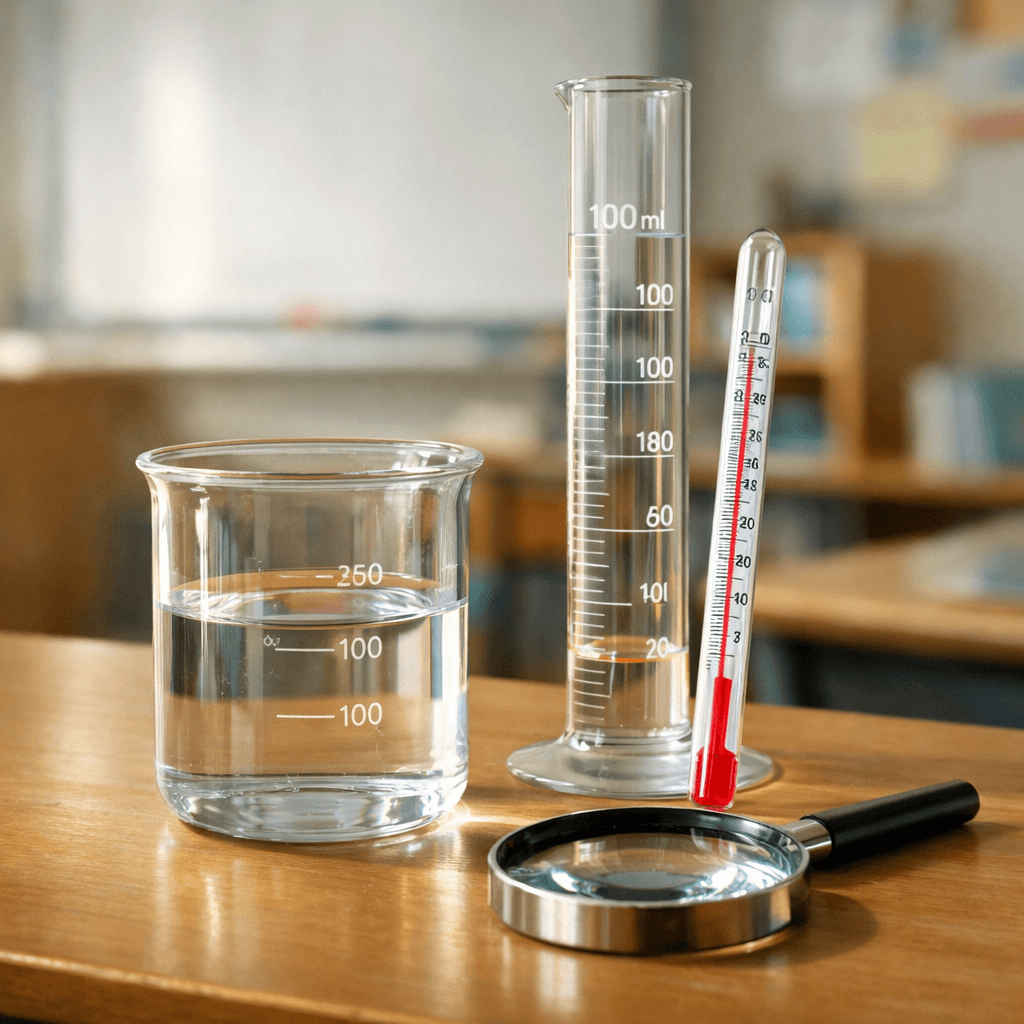
Lower Secondary Science
(Secondary 1 & 2)
Our Lower Secondary Science Programme is designed to guide students through the crucial early years of secondary education, helping them develop scientific reasoning, observation skills, and application abilities.
Lessons follow the MOE Science syllabus closely, with structured explanations, guided inquiry, and targeted feedback. Beyond academic mastery, we aim to nurture curious, confident, and independent learners who can approach science both logically and creatively.
We partner with parents to ensure every student develops conceptual clarity, analytical thinking, and the confidence to excel academically and beyond.
Our Approach
Hands-on learning with structured experiments and guided observations.
Concept-first teaching ensures understanding before application.
Structured answering techniques for open-ended and application questions.
Early misconception correction to build strong foundations.
Confidence building through active questioning and explanation.
Secondary 1
Secondary 1 introduces students to core scientific concepts across Biology, Chemistry, and Physics. Lessons focus on developing observation skills, inquiry techniques, and clear explanation skills, bridging primary science foundations with more structured secondary-level learning.
What Your Child Will Learn
Scientific investigation and lab skills
Matter and its physical properties
Classification of living things
Particulate model of matter
Forces, energy and heat basics
Ecosystems and interactions
Introductory biological systems (e.g., transport)
*Might differ based on school*
Secondary 2
Secondary 2 extends students’ understanding into more complex scientific concepts and applications, focusing on analysis, reasoning, and multi-step problem solving. Lessons prepare students for upper secondary science and national examinations.
What Your Child Will Learn
Chemical composition and separation methods
Atomic/molecular structure
Ray model of light
Energy transfer and heat effects
Chemical reactions and ecosystems interactions
Electrical systems
Human body systems (digestive, reproductive, transport models)
*Might differ based on school*

testimonials